Australia is embracing home battery storage faster than ever, but there’s an interesting shift happening in 2026. While more homeowners are investing in batteries, the average battery size being installed is becoming smaller.
At first glance, that might seem surprising. After all, wouldn’t a larger battery provide more savings?
Not necessarily.
Changes to Australia’s battery rebate structure mean that choosing the right battery size has become far more important than simply choosing the biggest one available.
The New Focus Is Value, Not Size
In previous years, many homeowners selected the largest battery they could afford because government incentives rewarded additional storage capacity almost equally.
Today, that’s no longer the case.
The updated rebate structure now provides stronger financial support for the first portion of battery capacity, while larger systems receive progressively lower incentives for additional storage. This encourages households to install batteries that better match their actual electricity usage rather than purchasing oversized systems simply to maximise rebates.
Why a Right-Sized Battery Makes More Sense?
Every household uses electricity differently.
Some families consume most of their power during the evening, while others generate plenty of excess solar during the day. The ideal battery depends on:
- Your daily electricity consumption
- Solar panel size
- Future energy plans
- Electric vehicle charging
- Air conditioning usage
- Backup power requirements
A battery that’s correctly matched to your home can often deliver better financial returns than a significantly larger system.
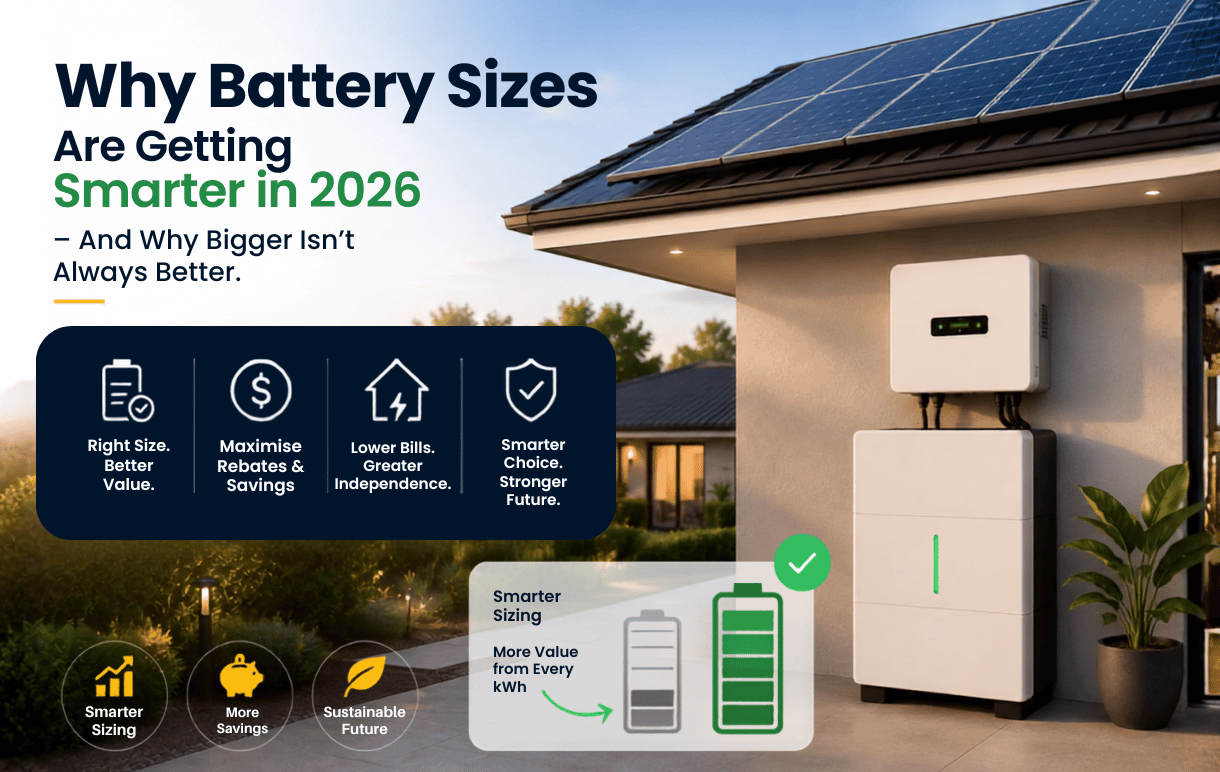
Bigger Doesn't Always Mean Better
Many homeowners assume larger batteries automatically produce bigger savings.
In reality, unused battery capacity doesn’t generate additional value.
If your household only uses a portion of the stored electricity each day, paying for extra storage capacity may increase the upfront cost without delivering proportional savings.
That’s why professional system sizing has become one of the most important parts of purchasing a solar battery system.
Solar Continues to Deliver Outstanding Value
One thing hasn’t changed.
Solar panels continue to provide excellent long-term savings for Australian households by reducing electricity purchased from the grid.
Adding battery storage simply allows you to use more of the energy your solar system generates instead of exporting it during the day.
Together, solar and battery storage can significantly increase your home’s energy independence.
Questions Worth Asking Before Buying
Before accepting a quote, ask your installer:
- Is this battery sized for my current electricity usage?
- Will it still suit my household in five to ten years?
- Can additional battery modules be added later?
- What percentage of my evening electricity will this battery cover?
- Will I receive the maximum available rebate for this system size?
These questions can help ensure you’re investing in long-term value rather than unnecessary capacity.
Choose Smarter Battery, Save More
Battery technology is evolving rapidly, and so are Australia’s rebate programs.
Instead of focusing on installing the largest battery possible, homeowners should focus on installing the right battery.
A well-designed solar and battery system should match your home’s energy needs, maximise available rebates, reduce electricity bills and continue delivering value for many years.
If you’re comparing battery quotes, understanding the right system size may be just as important as comparing prices.
Compare quotes from trusted local installers and find the right-sized battery system for your home—designed to maximise savings, not just capacity.